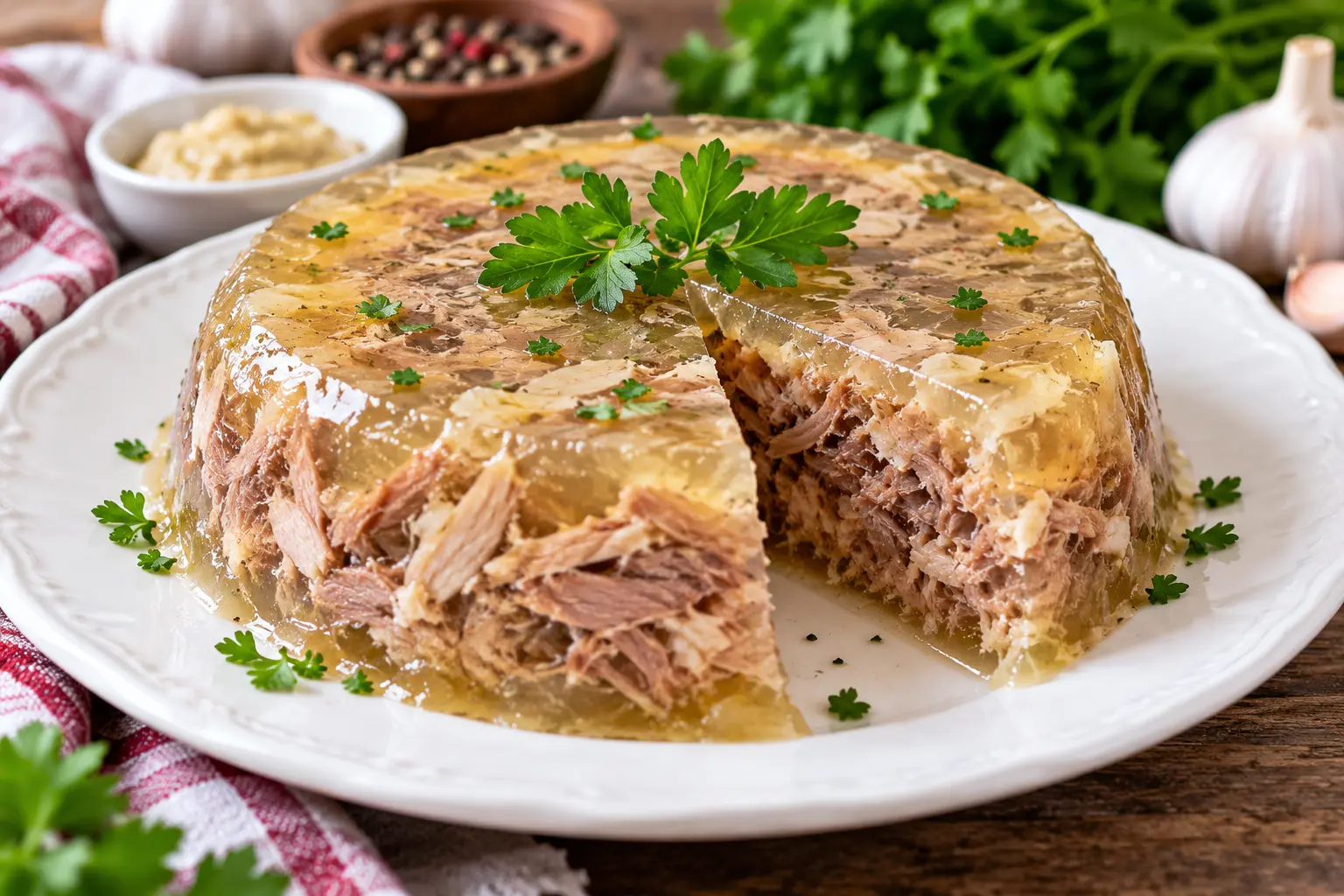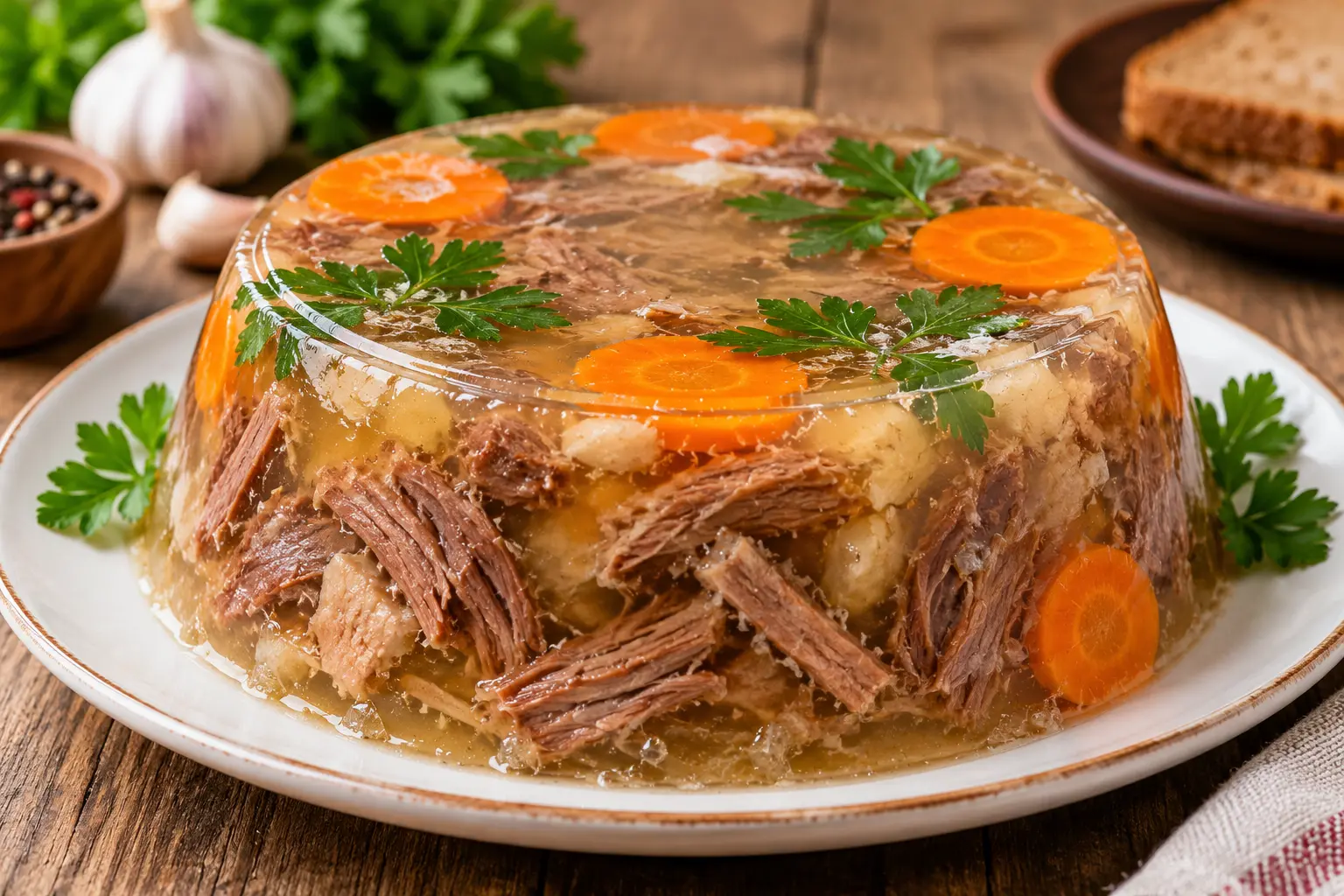
Meat Jelly Recipes

Meat Jelly Recipes

Beef Jellied Meat Recipe

Beef jellied meat is a refined variation of traditional aspic that emphasizes the deep, rich flavor of slow-simmered beef rather than the stronger taste of pork. Properly prepared, it develops a beautifully clear amber broth that sets naturally thanks to collagen extracted from beef shanks, joints, tendons, and marrow bones.

Unlike recipes that depend on commercial gelatin, authentic beef aspic relies entirely on natural collagen. During several hours of gentle simmering, connective tissue gradually dissolves into the broth, producing a firm yet delicate jelly after refrigeration.

Because beef contains less collagen than pork feet or hocks, selecting the correct cuts is essential. Beef shanks, marrow bones, knuckles, and joints provide the gelatin needed while also creating exceptional depth of flavor.

This recipe is ideal for holiday tables, family gatherings, or anyone looking for a lighter alternative to traditional pork-based meat jelly.


Why You’ll Love This Recipe

  • Rich beef flavor without excessive fat.
  • Naturally firm jelly without powdered gelatin.
  • Crystal-clear broth.
  • Excellent make-ahead appetizer.
  • Traditional cooking method.
  • Easy to customize with herbs and vegetables.

Ingredients

Meat

  • 4 lb (1.8 kg) beef shanks
  • 2 beef marrow bones
  • 1 beef joint or knuckle (optional but recommended)

Vegetables

  • 2 carrots
  • 2 celery stalks
  • 1 large onion

Aromatics

  • 5 garlic cloves
  • 3 bay leaves
  • 10 whole black peppercorns
  • 5 allspice berries

Seasoning

  • Kosher salt
  • Freshly ground black pepper

Optional Garnishes

  • Fresh parsley
  • Sliced carrots
  • Fresh dill
  • Hard-boiled eggs

Equipment

  • Large stockpot
  • Fine mesh strainer
  • Cheesecloth
  • Sharp knife
  • Large serving dish
  • Ladle

Choosing the Best Beef

The success of beef aspic depends primarily on selecting collagen-rich cuts.

Lean steak or roast will never produce enough natural gelatin on their own.

Instead, choose combinations such as:

  • Beef shank
  • Beef knuckle
  • Marrow bones
  • Oxtail
  • Beef tendons

These cuts slowly release collagen during cooking, creating a naturally firm jelly while producing an exceptionally flavorful stock.

Ask your butcher for soup bones with plenty of connective tissue rather than bones that have been cleaned completely.


Step 1 — Prepare the Meat

Rinse all beef thoroughly under cold running water.

Remove only loose fragments of fat while leaving tendons and connective tissue intact.

Place the meat and bones into a large stockpot.

Cover with cold water until everything is submerged by approximately 2 inches (5 cm).

Bring the pot slowly toward a gentle boil over medium heat.

During the first 20–30 minutes, skim away all foam that rises to the surface.

Taking time during this stage results in a noticeably clearer broth later.

Once the foam has mostly disappeared, reduce the heat until the broth barely simmers.


Step 2 — Build a Rich Beef Broth

After reducing the heat to a gentle simmer, add:

  • Onion (peeled and halved)
  • Carrots
  • Celery stalks
  • Bay leaves
  • Black peppercorns
  • Allspice berries

Do not add garlic or salt yet.

Cover the pot loosely and allow the broth to simmer gently for 5 to 6 hours.

A slow simmer is essential. The liquid should barely move, with only occasional bubbles reaching the surface. This preserves clarity while allowing collagen to dissolve gradually into the broth.

Every 30 to 45 minutes:

  • skim any remaining foam,
  • remove excess fat if necessary,
  • ensure the meat remains submerged.

If the liquid level drops too much, add a small amount of hot water.

By the end of cooking, the broth should have reduced by approximately one-third and developed a rich golden-brown color.


Step 3 — Check the Natural Gelatin

Before removing the meat, test whether enough collagen has been extracted.

Place one teaspoon of broth onto a chilled plate and refrigerate it for 10 minutes.

A properly prepared broth should become soft but firm enough to hold its shape.

If it remains completely liquid, continue simmering another 30 to 60 minutes before testing again.

Avoid adding commercial gelatin unless absolutely necessary—the traditional method relies on natural collagen alone.


Step 4 — Remove and Prepare the Meat

Transfer the beef to a large tray.

Allow it to cool until comfortable to handle.

Carefully remove:

  • bones,
  • large tendons,
  • cartilage that remains tough,
  • excess fat.

Keep the tender meat and any softened collagen-rich pieces.

Using two forks or your hands, shred the beef into bite-sized pieces.

Avoid mincing it too finely.

Larger pieces create a more attractive presentation and a more satisfying texture.


Step 5 — Strain and Season the Broth

Pour the broth through a fine-mesh strainer lined with cheesecloth.

For exceptionally clear aspic, strain the broth a second time.

Now season with:

  • kosher salt,
  • freshly ground black pepper.

Finally, stir in the finely minced garlic while the broth is still very hot.

Allow it to infuse for about 10 minutes before assembling the dish.


Step 6 — Assemble the Aspic

Arrange the shredded beef evenly among serving bowls or one large serving platter.

If desired, decorate with:

  • carrot slices,
  • parsley leaves,
  • fresh dill,
  • hard-boiled egg slices.

Slowly ladle the hot broth over the meat until completely covered.

Tap the serving dish gently to release trapped air bubbles.

Leave the dish uncovered for about 20 minutes before refrigerating.


Step 7 — Refrigerate

Cover the dish loosely.

Refrigerate for at least 8 hours, preferably overnight.

During this time the collagen network develops fully, giving the aspic its characteristic smooth texture.

Properly prepared beef aspic should slice cleanly while remaining tender on the palate.


Expert Tips

Use Several Beef Cuts

Combining shanks, marrow bones, and knuckles creates a deeper flavor and stronger natural gel.

Roast the Onion

For a darker broth, lightly brown the cut side of the onion in a dry skillet before adding it to the pot.

This traditional technique gives the broth a richer color without affecting clarity.

Keep the Temperature Low

The clearer the broth, the more elegant the finished dish.

Gentle simmering is far more important than cooking quickly.

Season Conservatively

As the broth reduces, flavors become more concentrated.

Always make the final seasoning adjustment after straining.

Chill Overnight

Although the aspic may appear firm after six hours, overnight refrigeration almost always produces the best texture.


Common Mistakes

Using Lean Beef Only

Cuts such as sirloin or round contain very little collagen.

Without collagen-rich bones and connective tissue, the broth will not set properly.


Boiling Instead of Simmering

A vigorous boil breaks fat into tiny droplets that permanently cloud the broth.

Patience produces far better results.


Skipping the Gel Test

Testing a spoonful before assembling the dish prevents disappointment later.

It is much easier to continue simmering than to discover the aspic never sets.


Oversalting Early

Salt becomes more concentrated as water evaporates.

Always perform the final seasoning near the end of cooking.


Refrigerating While Still Steaming

Allow the assembled aspic to cool slightly before placing it in the refrigerator.

This helps prevent excess condensation from dripping back into the broth and affecting its clarity.


Serving Suggestions

Traditional beef jellied meat is served thoroughly chilled as a first course or appetizer. Remove it from the refrigerator 10–15 minutes before serving to allow the flavors to become more pronounced.

Classic accompaniments include:

  • Prepared horseradish
  • Dijon or whole-grain mustard
  • Fresh rye bread
  • Sourdough bread
  • Pickled cucumbers
  • Cornichons
  • Pickled mushrooms
  • Fresh parsley
  • Chopped green onions

A crisp green salad or lightly pickled vegetables also provide a refreshing contrast to the rich, savory aspic.


Storage

Because meat jelly is served cold, proper food safety is essential.

Refrigerator

Store covered in the refrigerator at 34–39°F (1–4°C).

For the best quality, consume within 3–4 days.

Always use a clean serving utensil and return leftovers to the refrigerator promptly.


Freezing

Beef aspic freezes better than many people expect.

To freeze:

  1. Portion into airtight containers.
  2. Freeze for up to 2 months.
  3. Thaw overnight in the refrigerator.

Some separation of liquid is normal after thawing, but the flavor remains excellent.

Do not refreeze thawed aspic.


Nutrition Information

Approximate values per serving.

NutrientAmount
Calories275 kcal
Protein31 g
Fat15 g
Carbohydrates4 g
Fiber1 g
Sugar2 g

Nutritional values vary depending on the cuts of beef used and the amount of fat removed before chilling.


Frequently Asked Questions

Why didn’t my beef aspic set?

Beef naturally contains less collagen than pork hocks or feet. Using marrow bones, knuckles, shanks, or oxtail is essential for achieving a firm natural jelly.


Can I add gelatin?

Yes, but traditional beef aspic should not require it if collagen-rich cuts are used and the broth is simmered long enough.

Gelatin can be a useful backup if lean beef was used by mistake.


Why is beef aspic darker than pork aspic?

Beef contains more myoglobin, giving the broth a naturally deeper color and richer flavor.

This is completely normal and often preferred.


Can I make it a day ahead?

Absolutely.

In fact, many cooks believe beef jellied meat tastes even better after resting overnight because the flavors continue to develop.


What herbs pair best with beef aspic?

Fresh parsley, dill, thyme, and bay leaves all complement beef beautifully without overpowering its natural flavor.


How do I make the broth perfectly clear?

Keep the simmer extremely gentle, skim impurities regularly, and strain the finished broth through several layers of cheesecloth.


Can I use a pressure cooker?

Yes.

A pressure cooker shortens cooking time considerably, but many traditional cooks prefer slow simmering because it allows better control over broth clarity.


Is beef jellied meat healthy?

Beef aspic is naturally high in protein and collagen while remaining relatively low in carbohydrates.

Removing hardened fat after chilling further reduces the fat content.


Related Recipes

Continue exploring other traditional recipes:

  • Classic Jellied Meat
  • Pork Jellied Meat
  • Chicken Aspic
  • Turkey Aspic
  • Moose Meat Jelly
  • Ukrainian Kholodets
  • Polish Galareta
  • Romanian Piftie

You may also enjoy these guides:

  • What Is Meat Jelly?
  • What Is Aspic?
  • Why Does Meat Jelly Gel?
  • Best Meat Cuts for Aspic

Final Thoughts

Beef jellied meat is a timeless example of traditional home cooking. By slowly simmering inexpensive collagen-rich cuts, generations of cooks transformed simple ingredients into a dish with remarkable flavor, texture, and elegance.

Although preparing beef aspic requires patience, the technique itself is straightforward. Gentle heat, quality ingredients, careful skimming, and sufficient chilling time are the only secrets to success.

Once you’ve mastered this recipe, you’ll be well prepared to experiment with regional variations, different seasonings, and additional meats while preserving the authentic character that has made jellied meat a beloved dish for centuries.

Whether served during holiday celebrations, family dinners, or as part of a traditional appetizer spread, homemade beef jellied meat remains one of the finest examples of classic comfort food prepared with simple ingredients and timeless techniques.

***


Classic Jellied Meat Recipe

Traditional jellied meat, also known as aspic, is one of the oldest preserved meat dishes still enjoyed throughout Eastern and Central Europe. Although recipes vary from country to country, the basic technique has remained remarkably consistent for centuries: slowly simmer collagen-rich cuts of meat until they produce a naturally gelatinous broth that firms beautifully after chilling.

Unlike many modern shortcuts, this recipe relies on the meat itself rather than commercial gelatin. Pork hocks, beef shanks, and marrow bones contain abundant collagen, which gradually dissolves into the stock during long, gentle cooking. As the broth cools, the collagen forms a delicate yet stable jelly with a clean, silky texture.

The result is a dish that is both practical and elegant. Tender pieces of meat are suspended inside a crystal-clear savory jelly that can be served as an appetizer, part of a holiday buffet, or a centerpiece for traditional family celebrations.

Whether you know it as kholodets, galareta, piftie, or simply meat jelly, mastering the classic version provides the foundation for nearly every regional variation.


Why This Recipe Works

This recipe follows several traditional principles that consistently produce excellent results.

✔ Natural gelatin extracted from bones and connective tissue.

✔ Rich, full-bodied broth with deep meat flavor.

✔ Crystal-clear aspic through gentle simmering and careful skimming.

✔ No powdered gelatin required.

✔ Traditional seasoning that complements rather than overwhelms the meat.

✔ Suitable for holiday meals, family gatherings, or make-ahead entertaining.


Ingredients

Meat

  • 2 pork hocks (about 3 lb / 1.4 kg)
  • 2 beef shanks (about 2 lb / 900 g)
  • 1 beef marrow bone
  • 1 small onion
  • 2 carrots
  • 2 celery stalks

Aromatics

  • 6 garlic cloves
  • 3 bay leaves
  • 10 black peppercorns
  • 6 allspice berries
  • 1 teaspoon whole coriander seeds (optional)

Seasoning

  • Kosher salt, to taste
  • Freshly ground black pepper

Garnish (Optional)

  • Fresh parsley
  • Sliced cooked carrots
  • Hard-boiled eggs
  • Fresh dill
  • Whole peppercorns

Equipment

  • Large stockpot (8–12 quart)
  • Fine mesh strainer
  • Cheesecloth
  • Large mixing bowls
  • Serving molds or shallow dishes
  • Sharp knife
  • Cutting board
  • Ladle

Before You Start

The quality of the finished aspic depends far more on patience than on complicated ingredients.

Choose fresh cuts that contain plenty of connective tissue rather than lean muscle meat alone. Pork hocks, feet, joints, and beef shanks naturally contain collagen, which slowly transforms into gelatin during cooking. This process cannot be rushed.

Avoid boiling the stock aggressively. A gentle simmer keeps impurities from breaking apart and clouding the broth. Clear broth is one of the defining characteristics of excellent homemade meat jelly.

If possible, prepare the dish one day before serving. Overnight refrigeration allows the jelly to fully set while giving the flavors time to develop.


Step 1 — Prepare the Meat

Rinse all meat thoroughly under cold running water.

Trim away only loose pieces of fat while leaving the skin, tendons, cartilage, and connective tissue intact. These parts are responsible for producing the natural gelatin that gives meat jelly its signature texture.

Place the pork hocks, beef shanks, and marrow bone into a large stockpot and cover them with cold water by approximately 2 inches (5 cm).

Starting with cold water is important because it allows proteins and collagen to dissolve gradually into the broth, creating a richer stock with better body.

Bring the pot slowly to a gentle boil over medium heat.

As foam begins to rise to the surface, carefully skim it away using a ladle or fine spoon.

Continue skimming until very little foam remains.

This simple step significantly improves the clarity and appearance of the finished aspic.


Step 2 — Add the Vegetables and Aromatics

Once the broth is mostly free of foam, reduce the heat until the liquid barely simmers. You should see only an occasional bubble breaking the surface. A vigorous boil will emulsify fat into the stock and produce a cloudy aspic.

Add:

  • onion
  • carrots
  • celery
  • bay leaves
  • black peppercorns
  • allspice berries
  • coriander seeds (if using)

Do not add the garlic or salt yet.

Cover the pot loosely with a lid and allow everything to simmer gently for about 5 to 6 hours.

Check the liquid every 30–45 minutes.

If necessary, skim away any remaining impurities or excess fat that rises to the surface.

If evaporation becomes excessive, add only a small amount of hot water to keep the meat submerged.

By the end of cooking, the meat should separate easily from the bones and the broth should have reduced by roughly one-third.


Step 3 — Test the Broth

Before disassembling the meat, check whether enough natural gelatin has been extracted.

Place one teaspoon of hot broth on a small chilled plate and refrigerate it for about 10 minutes.

If it becomes firm and slightly springy, the broth contains sufficient collagen and no additional gelatin is necessary.

If it remains completely liquid, continue simmering for another 30–60 minutes before testing again.

Traditional meat jelly should set naturally without commercial gelatin.


Step 4 — Remove the Meat

Lift the meat carefully from the broth and transfer it to a large tray.

Allow it to cool until it is comfortable to handle.

Remove:

  • bones
  • cartilage
  • excess fat
  • skin (optional)
  • connective tissue that is unpleasant to eat

Keep only the tender meat and any soft collagen-rich pieces that have become pleasant after the long cooking process.

Discard the vegetables, as they have already contributed their flavor to the broth.


Step 5 — Strain the Broth

Pour the broth through a fine-mesh strainer lined with several layers of cheesecloth.

For exceptionally clear aspic, strain it a second time.

Taste the broth.

Only now should you season generously with salt and freshly ground black pepper.

Stir in the finely minced garlic while the broth is still very hot.

Let the garlic infuse for 5–10 minutes before the final assembly.


Step 6 — Shred the Meat

Using two forks or clean hands, separate the meat into bite-sized pieces.

Aim for a mixture of:

  • lean beef
  • tender pork
  • soft collagen-rich pieces

Avoid chopping everything too finely.

Larger pieces create a more attractive texture and improve the eating experience.

Mix the different meats together so that each serving contains a balanced combination.


Step 7 — Assemble the Meat Jelly

Arrange the shredded meat evenly among serving bowls or one large serving dish.

If desired, decorate with:

  • carrot slices
  • parsley leaves
  • dill
  • halves of hard-boiled eggs

Carefully ladle the hot broth over the meat until it is completely covered.

Lightly tap each dish on the countertop to release trapped air bubbles.

Leave the dishes at room temperature for about 20–30 minutes.

Do not cover them immediately, as trapped steam may drip back into the aspic and reduce clarity.


Step 8 — Chill Until Firm

Transfer the dishes to the refrigerator.

Allow at least 8 hours, preferably overnight, for the jelly to fully set.

Never attempt to speed up the process in the freezer.

Slow chilling creates a smoother, more stable texture.

When fully set, the aspic should hold its shape while remaining tender enough to melt pleasantly in the mouth.


Expert Tips

Small details often determine whether meat jelly is merely good or truly exceptional.

Start with Cold Water

Beginning with cold water extracts proteins and collagen gradually, producing a richer broth and better natural gelatin.

Simmer—Don’t Boil

A rolling boil clouds the broth and breaks meat fibers apart.

A gentle simmer keeps the stock clear and refined.

Salt at the End

As the broth reduces during cooking, early seasoning can easily become too salty.

Final seasoning gives much greater control over the finished flavor.

Don’t Rush the Chilling

Aspic continues developing both texture and flavor during refrigeration.

An overnight rest almost always produces better results than serving it the same day.

Use Several Types of Meat

Combining pork and beef creates a richer flavor profile than using either meat alone.

The pork contributes abundant collagen while the beef provides depth and complexity.


Common Mistakes

Boiling Too Hard

The most common mistake is cooking over excessive heat.

Cloudy broth can rarely be restored once proteins have dispersed throughout the stock.

Using Lean Meat Only

Chicken breast or lean beef alone contain very little collagen.

Without connective tissue, the broth will struggle to set naturally.

Skipping the Skimming

Removing foam during the first hour greatly improves the appearance of the finished aspic.

Adding Too Much Water

Adding large amounts of water late in cooking weakens both flavor and gelatin concentration.

Serving Too Soon

Freshly assembled meat jelly needs sufficient refrigeration time.

Trying to serve it after only two or three hours usually results in a weak set.


Serving Suggestions

Classic jellied meat is traditionally served cold, allowing the natural gelatin to retain its delicate texture. Remove the dish from the refrigerator 10–15 minutes before serving to let the flavors become more pronounced.

Popular accompaniments include:

  • Prepared horseradish
  • Dijon or whole-grain mustard
  • Fresh rye bread
  • Sourdough bread
  • Pickled cucumbers
  • Pickled mushrooms
  • Green onions
  • Fresh parsley or dill

For festive occasions, serve meat jelly as the first course alongside assorted cold appetizers, smoked meats, and fresh vegetables.


Storage

Homemade meat jelly stores exceptionally well when refrigerated.

Refrigerator

Store covered at 34–39°F (1–4°C).

For the best flavor and texture, consume within 3–4 days.

Always use clean utensils when serving to minimize bacterial contamination.


Can You Freeze It?

Yes, although freezing slightly changes the texture.

Natural gelatin may become more fragile after thawing, causing a small amount of liquid separation.

To freeze:

  1. Portion the aspic into airtight containers.
  2. Freeze for up to 2 months.
  3. Thaw slowly in the refrigerator overnight.

Do not refreeze previously thawed meat jelly.


Recipe Variations

One of the reasons meat jelly has remained popular for centuries is its versatility.

Beef Jellied Meat

Using only beef creates a darker broth with a deeper, richer flavor. Beef shanks and marrow bones provide excellent natural gelatin while producing a cleaner, less fatty finish.

Pork Jellied Meat

This is perhaps the most traditional variation throughout Eastern Europe. Pork hocks, feet, and shoulder create an exceptionally silky jelly with outstanding natural body.

Chicken Aspic

Chicken produces a lighter broth and milder flavor. Extra collagen-rich parts such as wings, necks, or feet help achieve a firm set without commercial gelatin.

Turkey Aspic

Turkey offers a leaner alternative while still developing a pleasant golden broth when prepared with drumsticks and wings.

Regional Styles

Many countries have their own distinctive interpretation of meat jelly.

Popular examples include:

  • Ukrainian Kholodets
  • Polish Galareta
  • Romanian Piftie
  • Czech Huspenina
  • Lithuanian Šaltiena

Although the seasonings differ, each recipe relies on the same traditional slow-simmering method.


Nutrition

Approximate values per serving.

NutrientAmount
Calories295 kcal
Protein29 g
Fat18 g
Carbohydrates3 g
SodiumVaries
CollagenNaturally high

Values depend on the specific cuts of meat used and the amount of fat removed before chilling.


Frequently Asked Questions

Why didn’t my meat jelly set?

The most common cause is insufficient collagen. Cuts such as pork hocks, feet, beef shanks, and marrow bones are essential for producing a naturally firm jelly. Excessive dilution with water can also prevent proper setting.


Do I need to add gelatin?

Not for this recipe.

When enough collagen-rich meat is simmered for several hours, the broth should set naturally without commercial gelatin.


Can I remove the fat layer?

Yes.

After chilling, many cooks simply lift away the thin layer of hardened fat before serving.

Others leave it intact because it helps preserve freshness during storage.


Why is my broth cloudy?

Cloudiness usually results from boiling too vigorously.

A gentle simmer combined with frequent skimming produces a much clearer aspic.


How can I make the broth clearer?

Strain it through several layers of cheesecloth while hot.

For exceptionally clear results, strain the broth twice before assembling the dish.


Can I make meat jelly ahead of time?

Absolutely.

In fact, meat jelly often tastes even better the following day after the flavors have fully developed.


What meat works best?

Traditional recipes combine several collagen-rich cuts.

Excellent choices include:

  • Pork hocks
  • Pork feet
  • Beef shanks
  • Beef marrow bones
  • Turkey wings
  • Chicken feet

Is meat jelly healthy?

Meat jelly is naturally high in protein and collagen while containing relatively few carbohydrates.

Its nutritional profile depends largely on the amount of visible fat removed after cooking.


Related Recipes

If you enjoyed this classic recipe, continue exploring traditional variations:

  • Beef Jellied Meat
  • Pork Jellied Meat
  • Chicken Aspic
  • Turkey Aspic
  • Moose Meat Jelly
  • Ukrainian Kholodets
  • Polish Galareta
  • Romanian Piftie

You may also enjoy our guides explaining:

  • What Is Meat Jelly?
  • Why Does Meat Jelly Gel?
  • What Is Meat Jelly Called?

Final Thoughts

Classic jellied meat represents centuries of practical cooking tradition. Long before refrigeration became common, slow simmering collagen-rich cuts of meat provided families with a flavorful dish that could be prepared in advance and enjoyed over several days.

Although the process requires patience, it is surprisingly straightforward. High-quality ingredients, gentle simmering, careful skimming, and sufficient chilling time are the keys to success.

Once you master the classic version, you’ll find it easy to experiment with regional styles, different meats, and your own family traditions.

Whether served during holiday celebrations or as part of a simple family meal, homemade meat jelly remains one of the most satisfying examples of traditional comfort food.

***


1